Choosing a floor for your basement isn't like choosing one for any other room in the house. It's a space where moisture can seep in from concrete, temperatures change, and the flooring needs to be tough enough for anything. Pick the wrong material and you're dealing with buckled boards, warping, or mold. Pick the right one and you've got a floor that holds up for decades and turns your basement into a versatile, durable space.
As your trusted flooring partners, we're here to cut through all of the noise and help you explore the top basement flooring options that will stand up to moisture, heavy use, and everything in between. Read on to explore the best materials for your basement so you can install the right floor from the very start.
Before you pick a floor, you need to know what you're dealing with. Basements come with conditions that don't exist anywhere else in a home or building, and skipping this step is how you could end up replacing a floor too soon after installing it.
Here are a few things to check before you start:
If there's one floor that was practically built for basements, it's luxury vinyl plank (LVP). LVP is built to handle moisture, concrete subfloors, and heavy foot traffic from day one. Here's why it earns the top spot for most basement projects:
Luxury vinyl tile gives you the same moisture resistance and durability as LVP in a tile format. It's a strong pick for basements where you want a stone-look or ceramic-look finish without the weight, feel, or installation that foes along with porcelain or ceramic tile. Here's what makes LVT a smart call below grade:
Not many floors can handle a damp basement better than porcelain and ceramic tile. Both are dense, moisture-resistant, and built to take whatever a below-grade space throws at them.
Here's the case for porcelain or ceramic tile in a basement:
Pro Tip: If you want a polished concrete look without a more complex installation, sealed concrete or an epoxy overlay is another option worth considering. Just keep the slab, add a finished surface, and you'll end up with something durable and easy to maintain.
Engineered hardwood is built differently than solid hardwood. Its layered core better handles humidity and can work in a basement, but only under the right conditions. Low-moisture basements with strong climate control are the target environment. If your basement runs damp or sees temperature swings, engineered hardwood can be a risk.
Laminate offers a beautiful wood-look option for basements. However, while standard laminate is moisture-resistant, it can swell, warp, and separate when moisture gets underneath it. If you're set on laminate, look specifically for waterproof laminate with a sealed core.
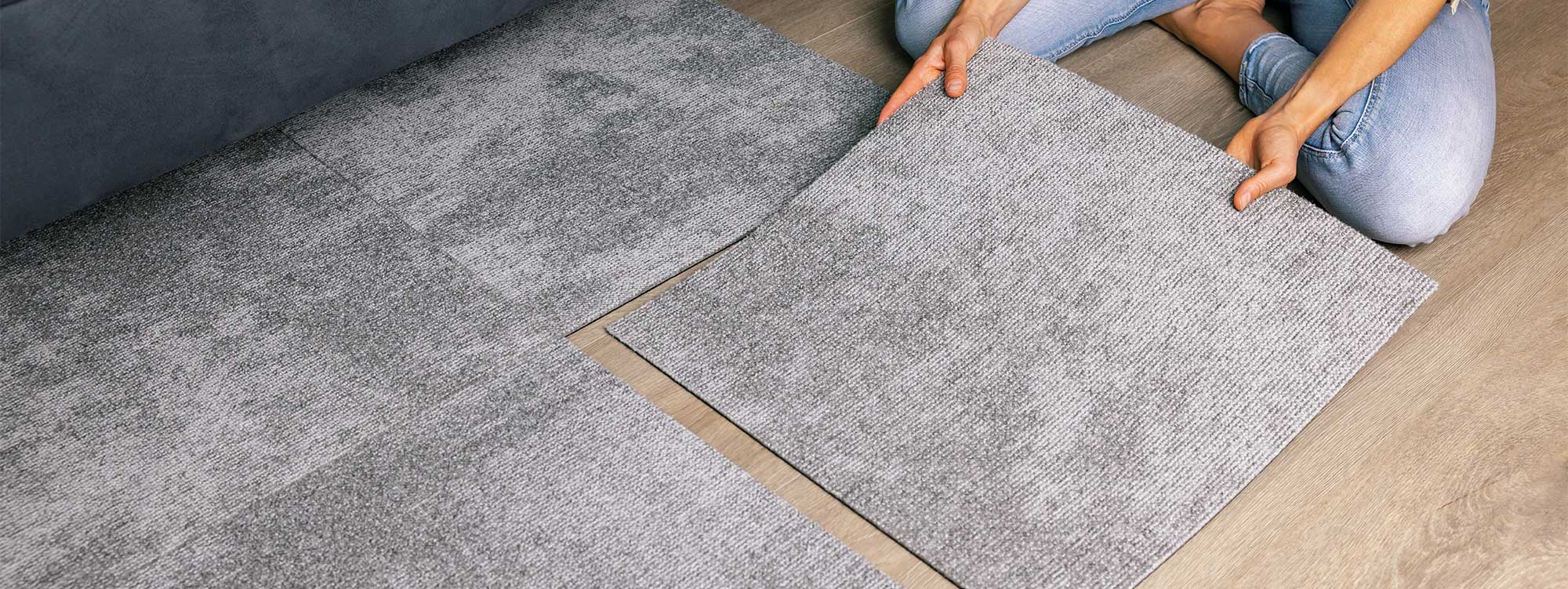
Carpet tiles bring warmth and comfort to a basement. Because they're modular, individual tiles can be swapped out if one gets stained or damaged, which makes them a practical choice for below-grade spaces where spills and moisture are a real possibility.
Ready to get moving on your project? Getting started is easier than you think. Fill out a few details and our flooring experts will put together a clear, competitive estimate built around your unique space and your project. Request a quote today and take the first step toward a basement floor that's built to last.
The right floor depends on what the space is actually doing:
LVP or engineered hardwood are both strong picks here. Wide plank formats can make the space feel polished and intentional, and both options hold up well under everyday foot traffic. If comfort is a priority, look for LVP with an attached underlayment for a softer feel underfoot.
LVP or tile are the go-to choices for a basement gym. Both handle heavy foot traffic, equipment weight, and the occasional drag without showing damage. They're also easy to clean after a tough workout, which matters more than most people expect going in.
LVP is the clear call for rental spaces. It's durable, moisture-resistant, and easy to clean between tenants, which keeps turnover costs low. Styles have come a long way, so you're not sacrificing appearance to get a floor that can take heavy use,
Comfort and warmth matter most in these spaces, making engineered hardwood, LVP, or carpet tiles strong options. Any of the three can create a finished, livable feel that doesn't read as a basement afterthought. Just make sure to confirm moisture levels before committing to any wood-based product.
Function comes first here. Sealed concrete, epoxy overlay, or sheet vinyl are all practical choices that prioritize durability and easy cleanup over aesthetics. These surfaces are tough to damage and simple to maintain, which is exactly what a utility space needs.
You know your basement. Now it's time to stop second-guessing and get the right floor down. Our experts know floors inside and out, and they're ready to point you toward the best option for your space and your budget. Whether you're finishing a residential basement or outfitting a commercial space, we've got durable, budget-friendly floors in stock and ready to go. Don't wait to contact us today and get your project moving.